
Buying YouR Instrument
"A great musician never blames their instrument for the sound it creates."
Choose Your Instrument
-
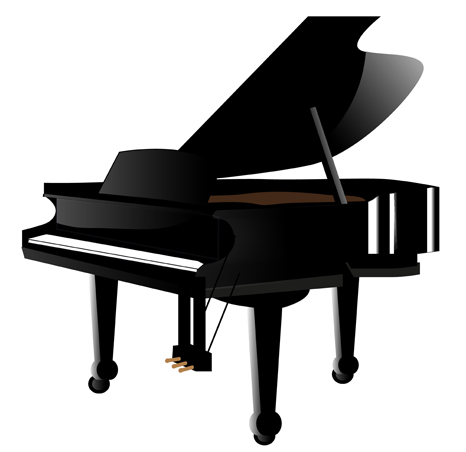 Piano
Piano
Choosing your piano
Essential features:
• A full keyboard - 88 keys (some small pianos have 85 keys)
• Weighted keys
• Height-adjustable stool
The choice of acoustic or digital pianos depends on your circumstances.
ACOUSTIC
DIGITAL -
The hammers mechanically strike strings. Requires force, builds strength and is very responsive.
-
The hammer action uses a simulated mechanism. The touch and feel varies between models.
The strings produce vibrations and resonance to make the sound. The simulated sound is produced by recordings of pianos and then emitted through speakers. Dynamic range is vast due to the strings resonating. Dynamic range is limited. Needs regular tuning and maintenance. No need for maintenance. Requires space and is not portable. More compact and can be portable. Often require accessories. No electronic features. Variety of features eg. Headphone jacks, sounds, connectivity, recording etc Cannot practice silently. Can practice silently. Can be more expensive when bought new. Cheaper options available, as well as more expensive high-end models. Depending on care, lasts decades. Become outdated more quickly due to technological advances. Second-hand pianos are more easily sold/bought. More difficult to sell second-hand. Acoustic pianos provide a fuller scope of colour, overtones, harmony and range of expression. For higher level pianists, it is highly recommended to have a well-maintained acoustic piano. If this is not possible, then some digital pianos offer a good alternative, coupled with regular acoustic piano practice too where possible.
Beginner students may prefer to start with a digital piano. I often recommend the Yamaha P-45 as a good all-round beginner digital piano.
Increasing the budget slightly, the Yamaha P-125 or the Casio PX-160 would be good alternatives with more advanced features than the Yamaha P-45.
The Yamaha Clavinova range is also very popular for all levels.
Exciting Alternatives
Acoustic Hybrid PianosThese acoustic pianos are a combination of acoustic and digital pianos. They have real strings, and are also hooked up to a digital sound engine, which allows the pianist to mute the strings and hear through headphones. They can also be connected to apps and computers etc which makes these very versatile.
Digital Hybrid Pianos
These have the body of an acoustic piano, but no strings. The hammer action feels real, but the sound is purely digital. Again, an exciting choice.
Recommended shops
We recommend the following piano shops, who will help you find your piano:
Yamaha Pianos have a great range of Digital Pianos, especially their Clavinova range. Have a look at their stock on the website, or in their showroom in Wardour Street (Oxford Circus/Tottenham Court Road tube).
-
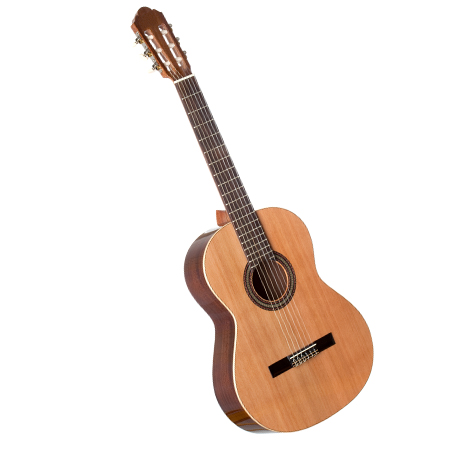 Guitar
Choosing your Guitar
This a list of recommended beginner-friendly guitars to purchase. These are all just suggestions; we would also recommend that you first go to Denmark Street (or London Guitar Studio for classical guitars!) and have a look around the guitar shops there and see what you or your child take to, and feels comfortable with. When buying guitars, do avoid Amazon if possible. It’s definitely better to go to a specialist shop (online is fine) if at all possible.
SMALLER GUITARS FOR SMALLER CHILDREN
¾ size classical guitars are recommended for small children just starting, we've also included below a ¾ size electric guitar which is very great if you would like to start on electric guitar or are wanting to move to electric guitar but are still quite little. We wouldn't recommend ¾ size steel string acoustic guitars.AMPS FOR ELECTRIC GUITARS
If you get an electric guitar, you need an amp. We've included a recommendation below. Additionally, for the jack cable to connect the guitar to the amp, we'd recommend Fender or D'Addario cables.CLASSICAL (NYLON STRING) GUITARS
Full size – Yamaha C40 II3/4 size - Jose Ferrer Estudiante 3/4
STEEL STRING ACOUSTIC GUITAR
Fender CD-60ELECTRIC GUITARS
Full size - Yamaha Pacifica 0123/4 size – Squire Mini Stratocaster
Amp – Boss Katana Mini
GUITAR PICKS
We'd recommend the following variety packSTRINGS
Classical
Electric
Steel string acoustic(Students should wipe down strings after playing to avoid strings getting rusty and needing to change them more often, especially for electric or steel string guitars).
CLIP ON TUNERS
Snark SN5X Clip-On Guitar, Bass and Violin Tuner
-
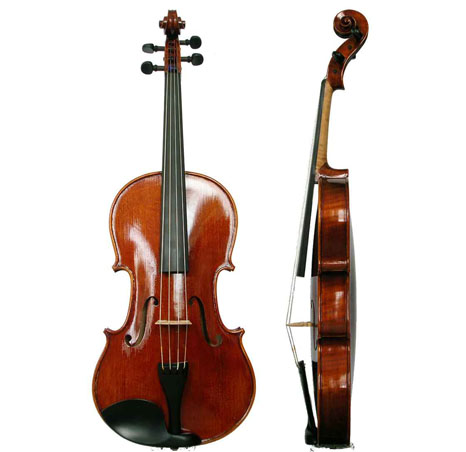 Violin/Viola
Choosing your Violin
Too small is better than too big!
The size of the violin depends on the arm length of the student..
The way to tell if a violin is the right size is to get the student to put the violin under their chin and link the fingers of their left hand over the end of the scroll at the end of the neck. If they have to stretch their arm, then the violin is too big. The ideal length is if there is a fair amount of give at the elbow.
Buying a violin that's too big, knowing the student will grow into it is a falseeconomy because it will be very difficult to play and the student could feel strained economy because it will be very difficult to play and the student could feel strained
Measuring the pupil’s arm length
1. Extend the left arm by their side parallel to the floor, palm facing upwards.
2. Bring the arm slightly to the front of their body.
3. Measure the distance between the base of their neck and the centre of the palm.
Based on how that measurement, here is a chart of recommended violin sizes:
-
INCHES
SIZE -
14.5 - 16
-
1/16
-
16 - 17.75
-
1/10
-
17.75 - 19
-
1/8
-
19 - 20.75
1/4 -
20.75 - 22
1/2 -
22 - 23.5
3/4 -
23.5+
4/4
Your teacher at Scales Music may advise you to exchange the instrument with the shop for a different size if they think that it would suit the pupil better.
Accessories
Most shops include the bow, strings and a lightweight case. You will also need a shoulder rest that matches the size of the violin and some rosin, if not included. It is also advisable to get a spare set of strings, in case any of them break.
Shop and instrument recommendations
We highly recommend the Stentor Outfit model, which you can find in many instrument shops:
Below is a specific student model that the shop Bridgewood and Neitzer sell which we recommend:
Bridgewood and Neitzert London
Violin Rental
Violin rental is a great option if you only have one child who learns the violin because you can upgrade the size as they grow.
Bridgewood and Neitzert London
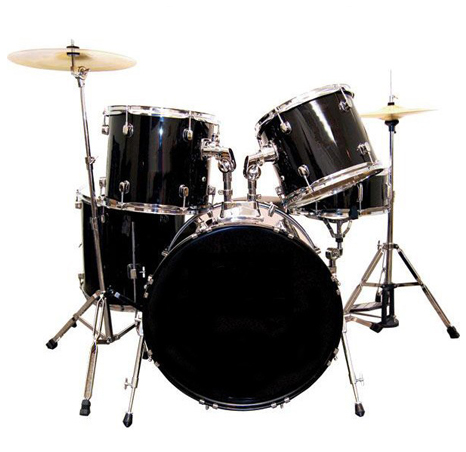 DRUM KITS
Choosing your Drum Kit
Ideally, we recommend having an acoustic drum kit. Below are some suggested kits
Acoustic Drum Kits:
• Ludwig Break Beats
• Ludwig Pocket Kit (for small children)
• Yamaha Stage Custom
• Gretch Renown
Most acoustic drum kits come without cymbals.
Great beginner Cymbal Sets are:
• Meinl HCS Cymbal Set
• Zildjian Family Standard Cymbal Set
• Sabian B8X Cymbal Set
Most acoustic drum kits come without cymbals.
Electronic Drum Kits:
• Millenium MPS-150X E-Drum Mesh Set
• Roland TD-1DMK V-Drum Set
• Roland TD-17KVX V-Drums Electronic Drum Set
Drum Sticks:
• Vic Firth 5A
-